Growth Has Weight
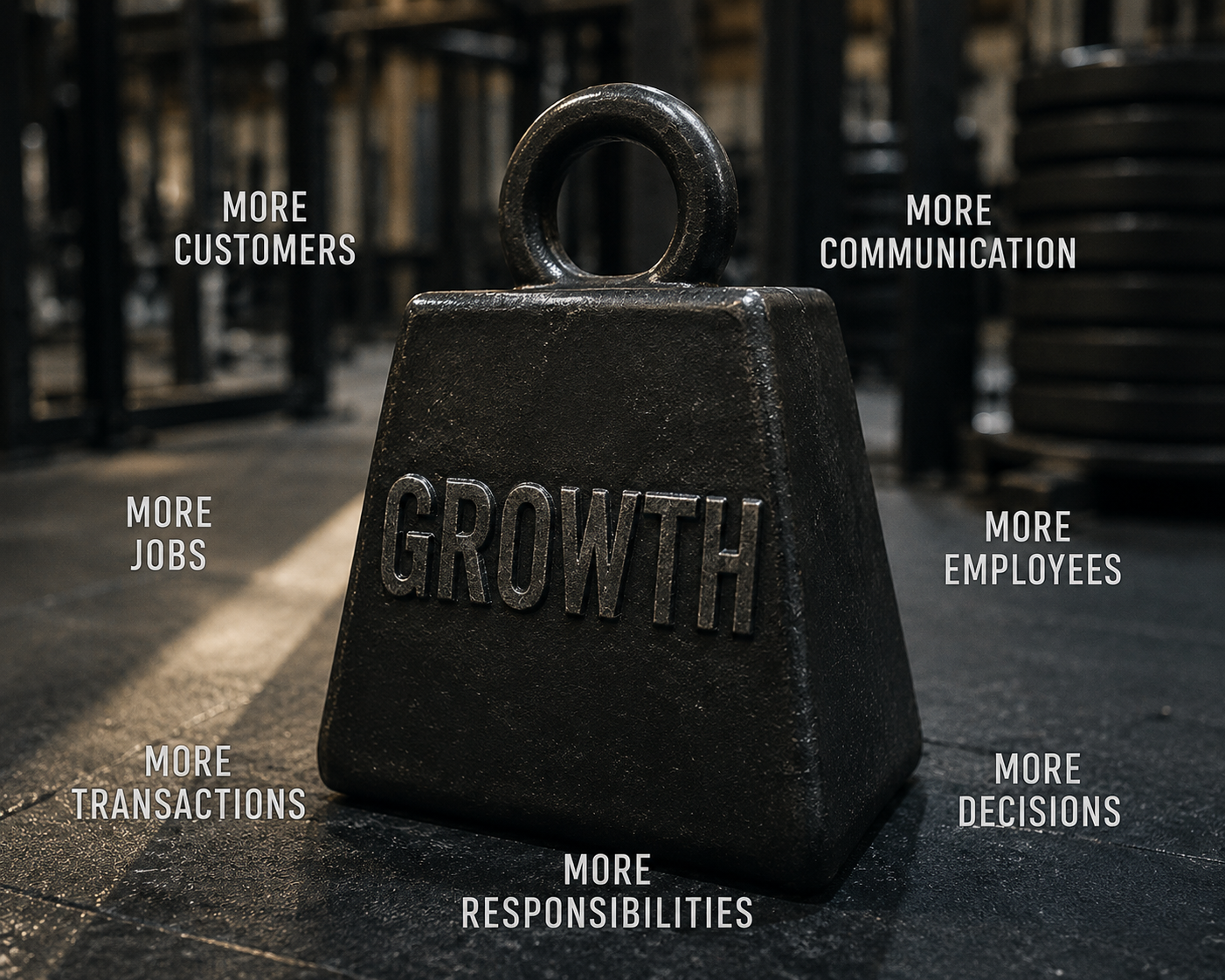
Growth has weight.
More revenue sounds great.
But revenue never arrives alone.
More customers create more communication.
More communication creates more scheduling.
More jobs create more documentation.
More employees create more management.
More transactions create more bookkeeping.
More invoices create more receivables.
More activity creates more data.
More departments create more handoffs.
More decisions create more demand on leadership. And suddenly the company isn't simply Bigger.
It's more complex.
That's why growth can look incredible on a P&L while feeling completely different inside the business.
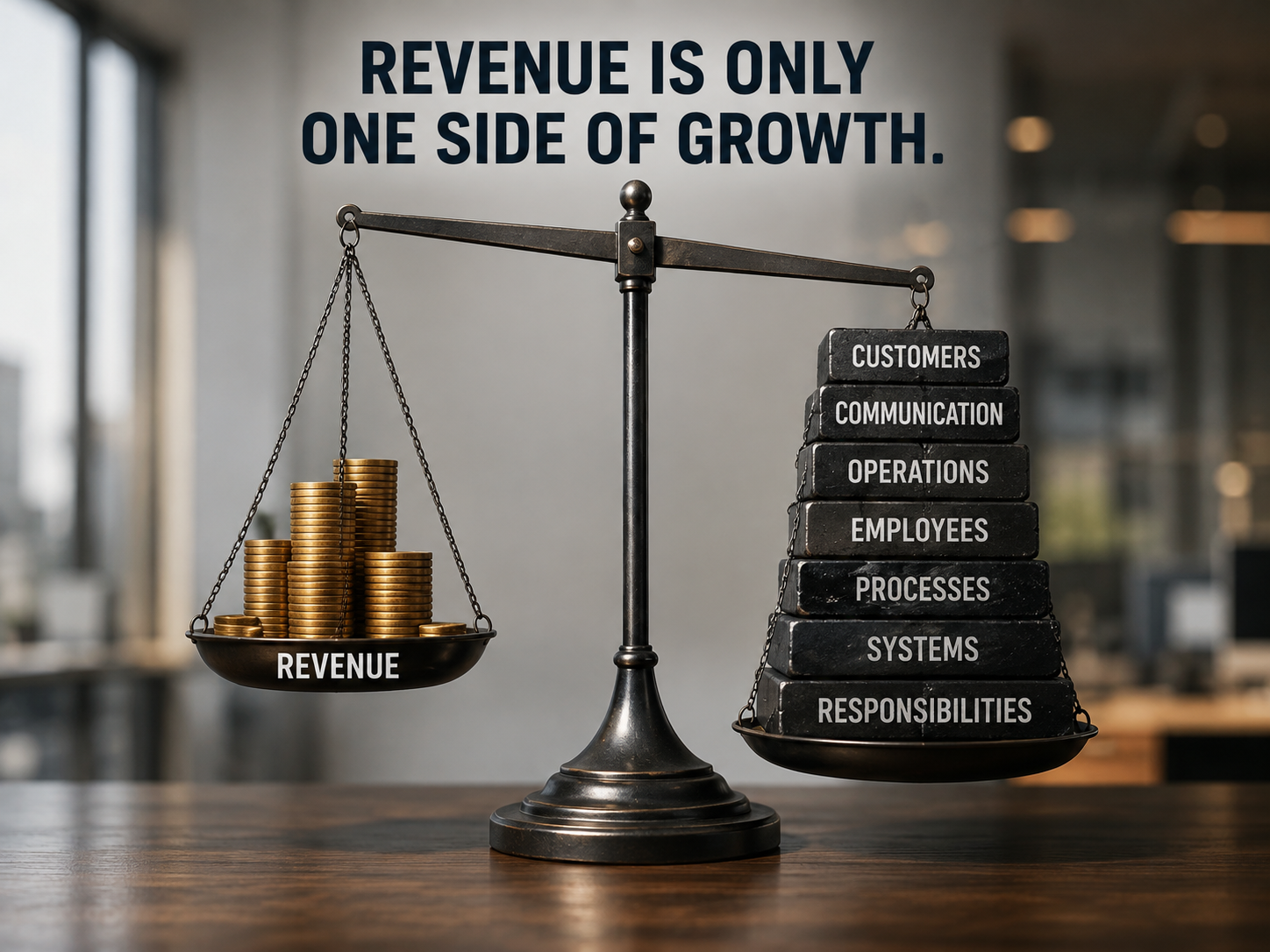
Revenue Is Only One Side of Growth
We tend to measure growth by the numbers.
Revenue increased.
Customer volume increased.
Headcount increased.
Another truck was added.
Another location opened.
Another department was created.
Those are visible signs of success.
But behind every one of those numbers is additional operational weight that somebody—or some system—has to carry.
Add customers and someone has to answer their calls.
Add technicians and someone has to manage their schedules.
Add jobs and someone has to track their progress.
Add invoices and someone has to make sure they're paid.
Add employees and payroll becomes more complex.
Add departments and communication has to travel farther.
Add locations and processes that once happened naturally now have to be intentionally coordinated.
Growth doesn't simply increase what the business earns. It increases what the business must manage.
Complexity Doesn't Arrive All at Once
That's what makes it difficult to recognize. There usually isn't one morning when everyone walks into the office and announces:
"Our infrastructure can no longer support this company."
It happens gradually.
One person takes on another responsibility.
A spreadsheet gets created.
Someone develops a workaround.
Another software platform gets added.
The owner starts checking one more thing personally.
The office manager takes responsibility for another process.
Employees create their own ways of getting things done.
And because everyone is capable, they make it work. Until "making it work" becomes the way the company operates.
The business is still moving.
Customers are still being served.
Revenue is still coming in.
But underneath that success, the organization may be using more and more human effort to compensate for systems that haven't grown at the same pace.
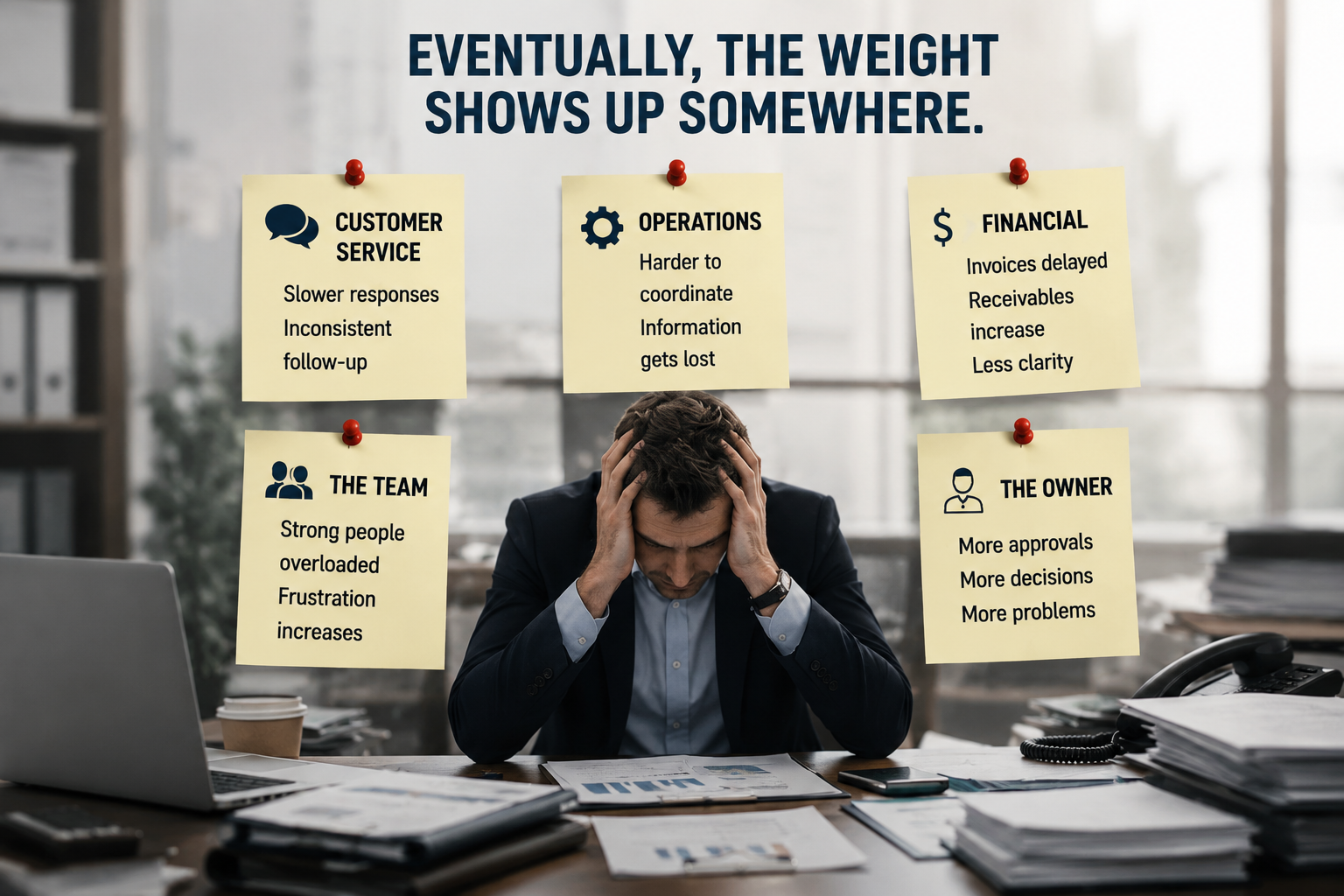
Eventually, the Weight Shows Up Somewhere
Growth pressure doesn't always appear where you expect it.
Sometimes it appears in customer service.
Calls aren't returned as quickly.
Follow-up becomes inconsistent.
Sometimes it appears in operations.
Schedules become harder to coordinate.
Information gets lost between the office and the field.
Sometimes it appears financially.
Invoices aren't sent promptly.
Receivables increase.
Leadership knows revenue is growing but has less clarity about where the money is going.
Sometimes it appears in the team.
Your strongest people become overloaded because they're the ones everyone trusts to get things done.
And sometimes the weight lands directly on the owner.
More approvals.
More questions.
More decisions.
More problems requiring leadership attention.
The company grew so leadership became responsible for even more instead of less.
That's the opposite of scalability.
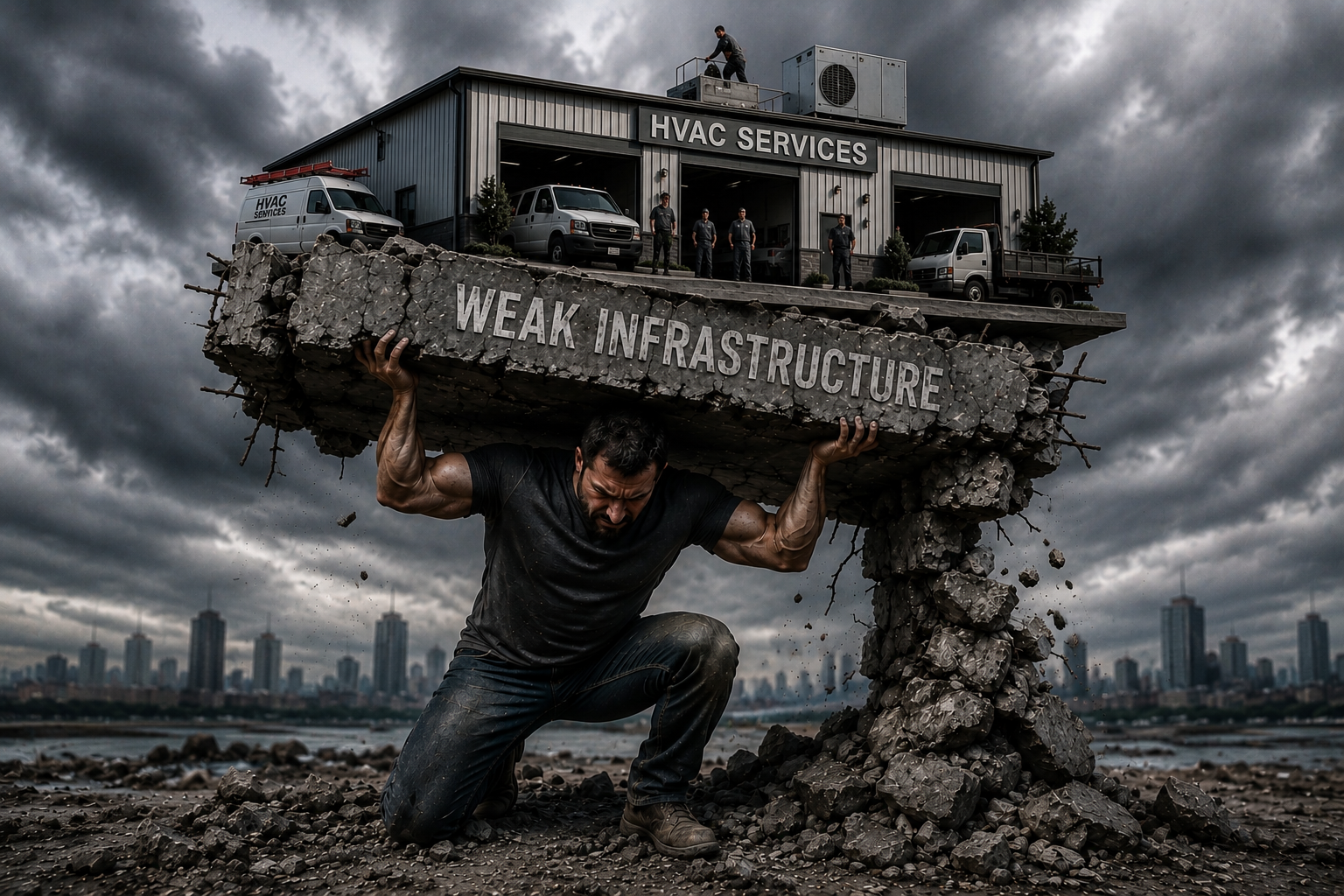
Strong People Can't Carry Weak Infrastructure Forever
This is important because operational strain is often mistaken for a people problem.
Someone isn't keeping up.
A manager seems overwhelmed.
The office is constantly behind.
Employees are frustrated.
Leadership starts wondering whether they have the wrong people.
Sometimes that's true.
But sometimes good people are simply carrying too much.
You cannot permanently solve an infrastructure problem by asking people to work harder.
Eventually, capacity wins.
The answer isn't always another employee either.
Adding people without improving the systems underneath them can simply add another layer of communication, management, and complexity.
The question has to go deeper.
What is creating the weight in the first place?
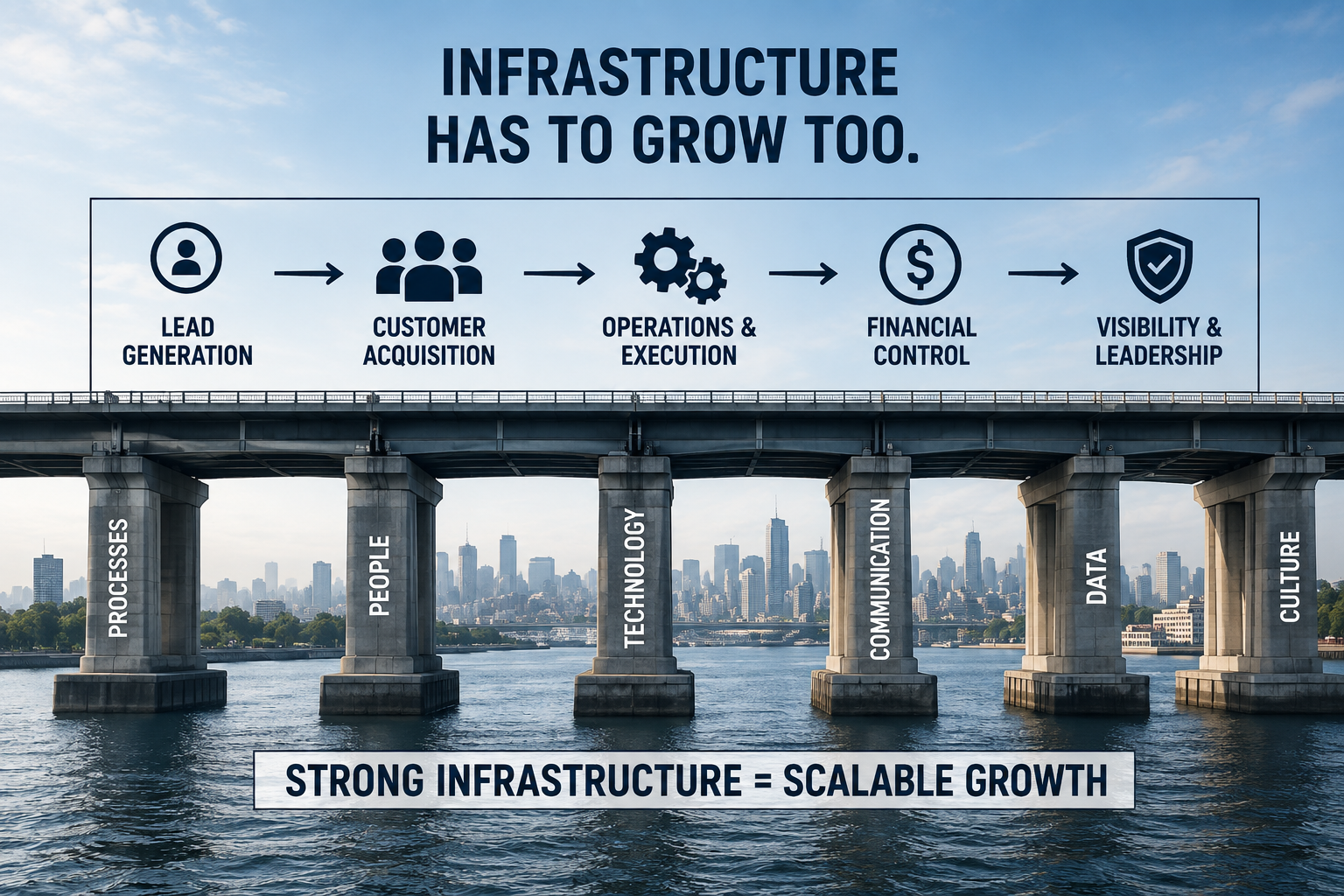
Infrastructure Has to Grow Too
Every stage of business requires infrastructure capable of supporting it.
That means the systems underneath the company have to evolve as the company evolves.
Lead generation has to connect to customer acquisition.
Customer acquisition has to connect to operations and execution.
Operations have to connect to financial control.
Communication has to move across departments.
Responsibilities have to be clear.
Processes have to be repeatable.
Financial information has to be visible.
Leadership has to be able to see what's happening without personally touching everything.
That's when growth becomes scalable.
Not when the business can simply get bigger.
But when it can carry bigger.
The Task Allot Perspective
At Task Allot, we don't believe growth itself is the problem.
Growth is the goal.
But growth without supporting infrastructure creates pressure.
And pressure eventually finds the weakest point in the business.
That's why sustainable growth isn't only about generating more revenue.
It's about strengthening what has to carry that revenue once it arrives.
Because the next million dollars doesn't arrive by itself.
It brings customers, transactions, communication, employees, responsibilities, decisions, and expectations with it.
Your infrastructure has to be ready for all of it.
Yesterday we asked:
Is what got you here built to carry where you're going next?
Maybe there's another question we should ask first:
How much more is your business carrying today than the infrastructure underneath it was originally built to hold?
Because growth has weight.
The question is whether your business is built to carry it.
— Task Allot


.png)


.png)





.svg)

.svg)


